We speak too little of beauty. Yet, time and again, the wealth of culture, and the creativity to embed that culture into things of beauty, has the power to surprise.
– James Panero, “New Worlds” The New Criterion, September 2021
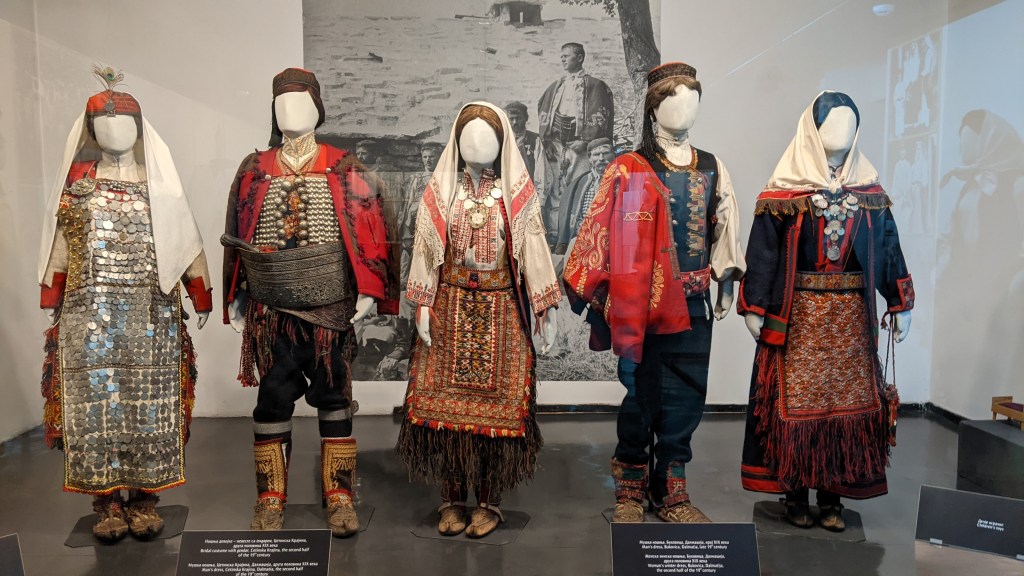
Dalmatian clothing: On the far left is a bride’s wedding clothing. Serbian clothing draws from Italian, Hungarian, Austrian, and Turkish influences. All are heavily decorated with embroidery, soutache, tassels or metalwork.
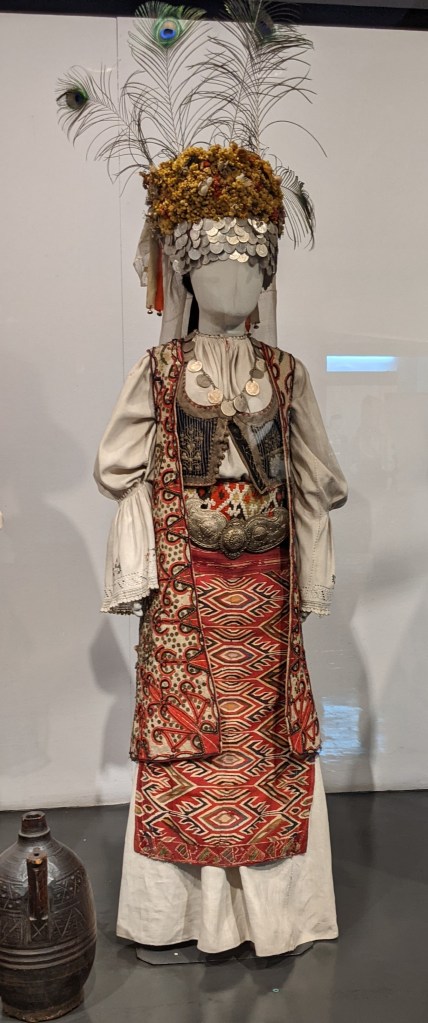
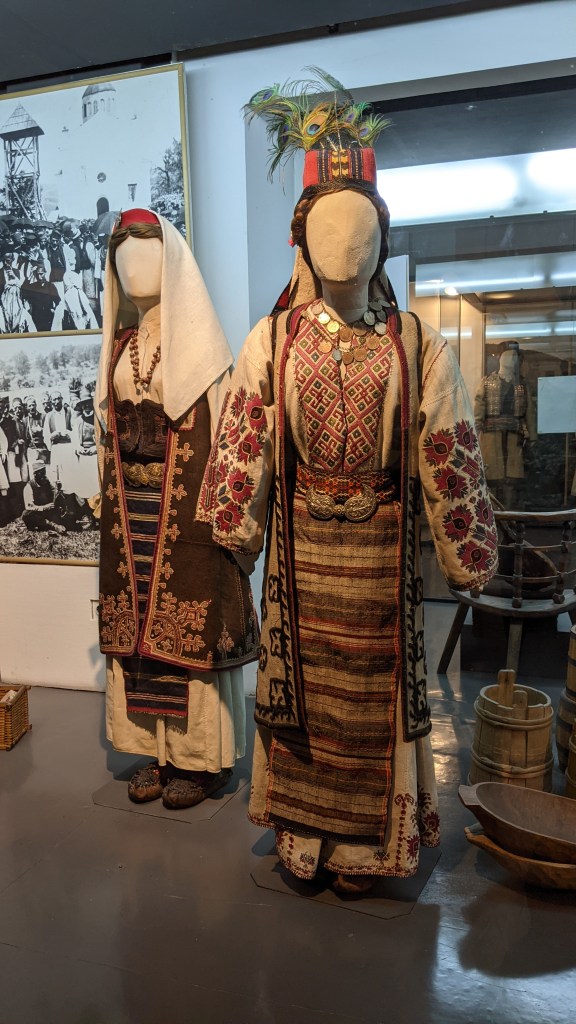
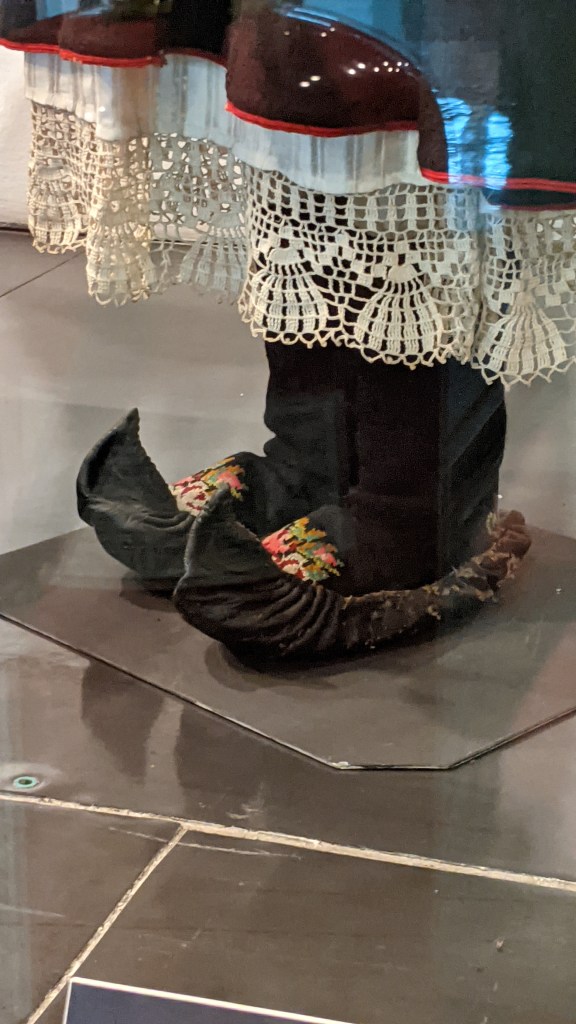
19th century bridal costume – Sumadija, Serbia The headdress is made of dried flowers, coins and peacock feathers. The little waistcoat, known as a jelek, was common throughout Serbia, the winged belt buckle is known as a pafte, and hidden under the long chemise, are the opanci (curl-toed shoes).
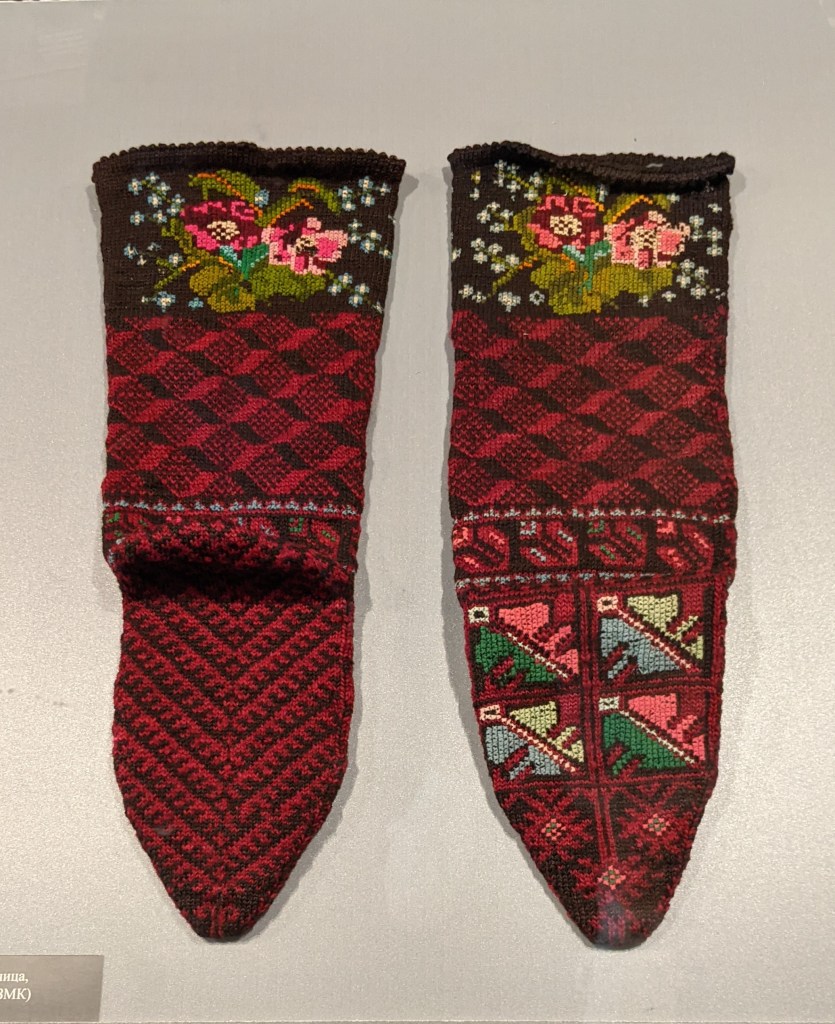
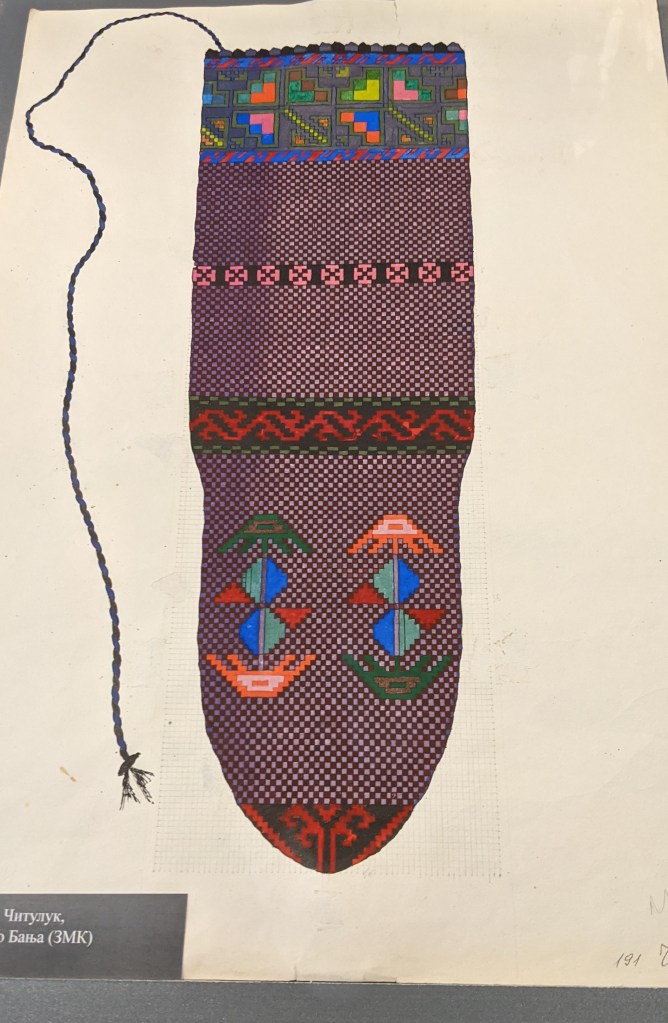
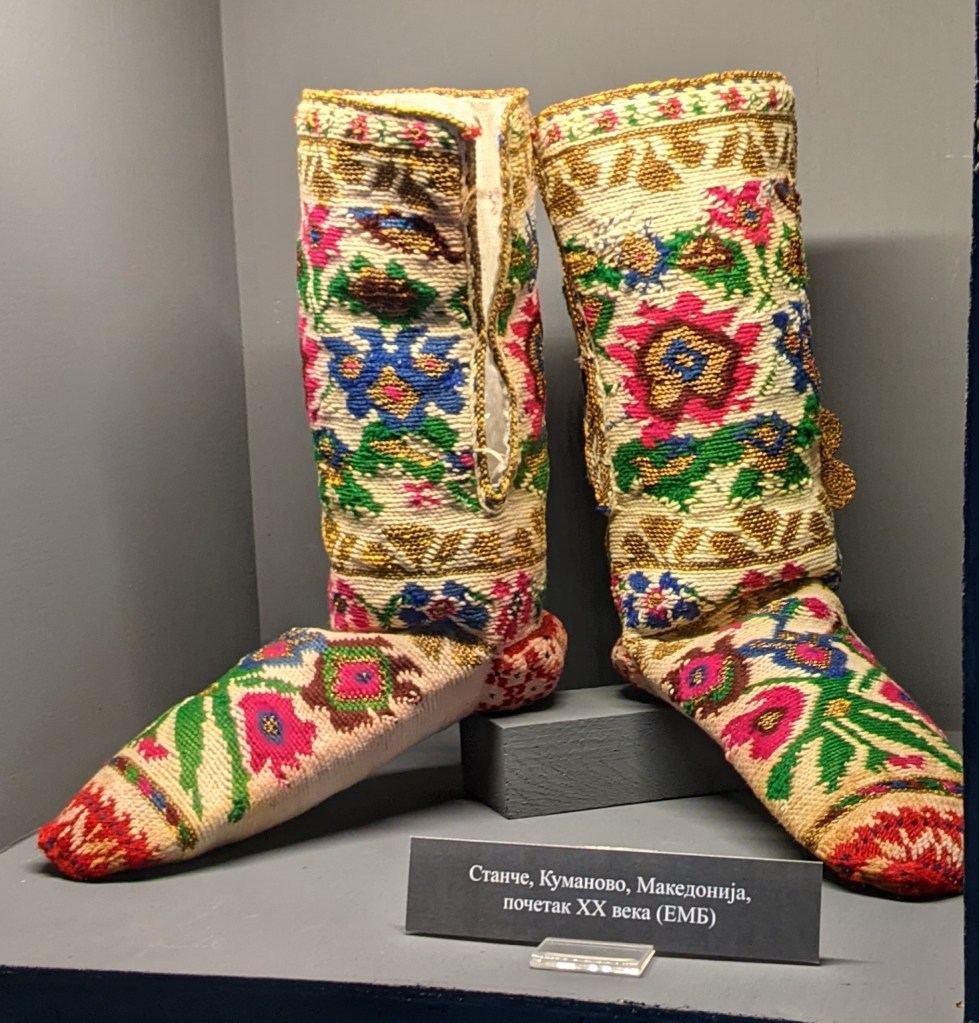
Traditional Serbian socks, knit in the round with two colors, then cross-stitched with additional colors. The socks were designed in distinct sections (tip, toes, instep, sole, etc.) and unique patterns were created for each. The embellishment was done as each portion was completed.
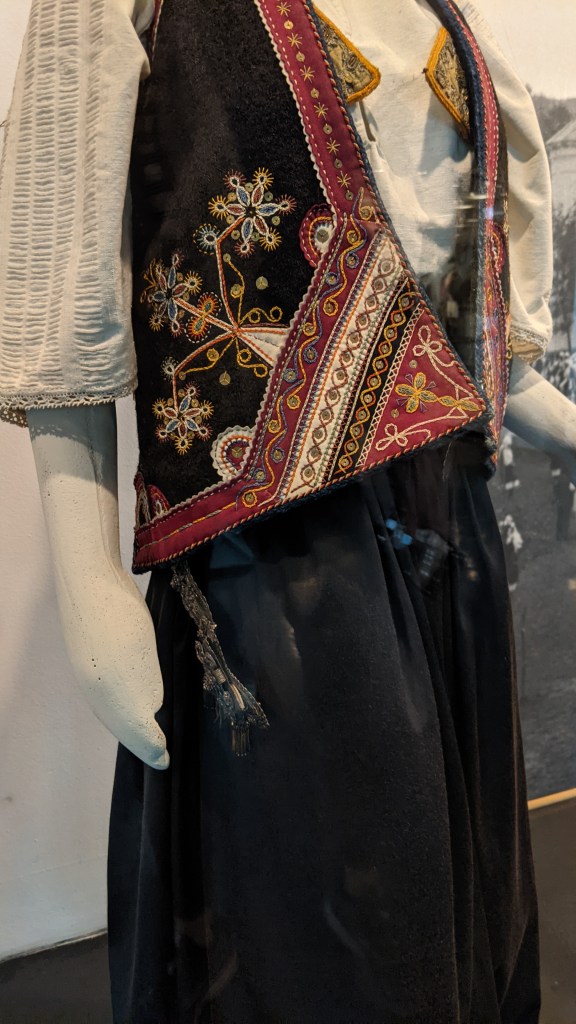
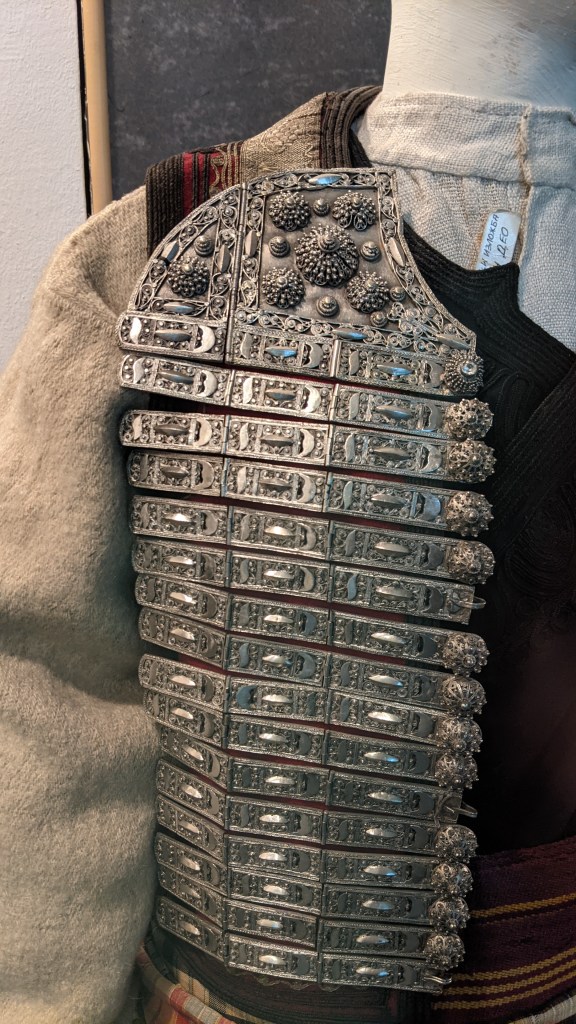
Detail of a man’s vest, made of wool and embellished with geometric motifs.
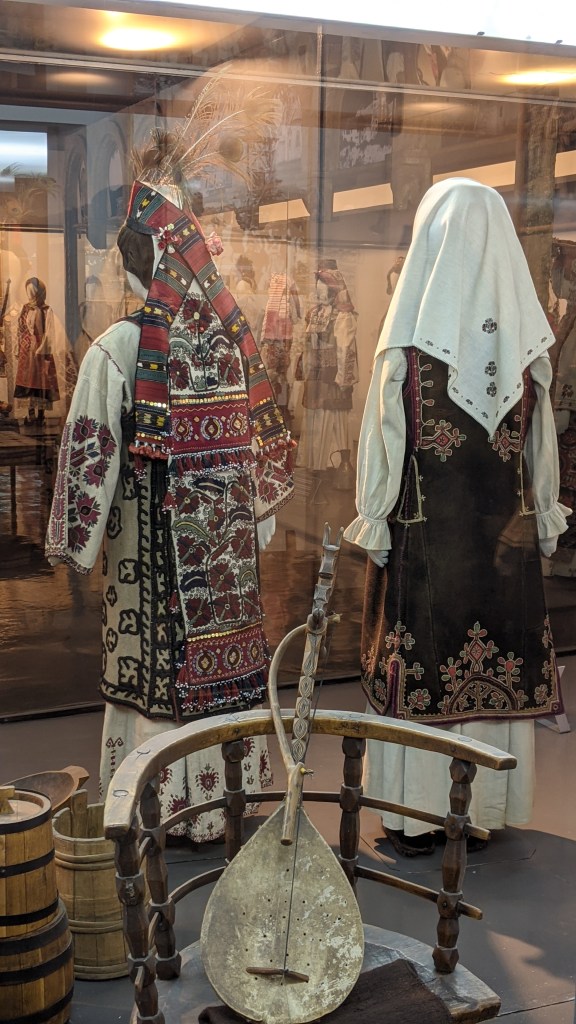
Hand woven full-length white chemises, zebun (long, 3-paneled vests) and sashes with embroidered embellishments. In the foreground is a gusle, Serbia’s national instrument. It has only one string and traditionally has a horse head carved into the top — you can just make out the horse’s ears in this picture. It’s played with a bow, like a violin, but the sound isn’t for the faint of heart.
The front side of the garments shown in the picture above.
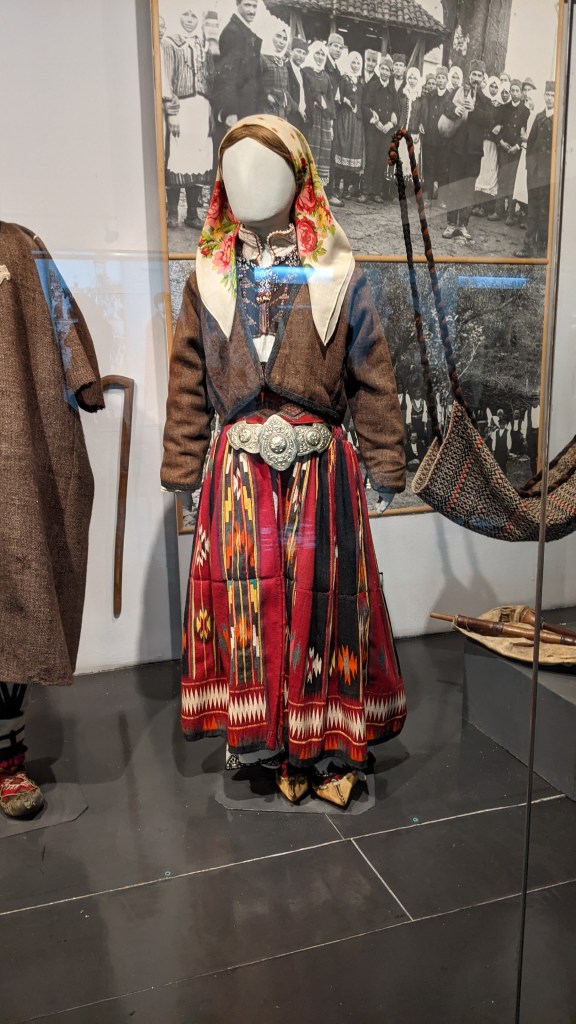
A woman’s summer outfit. The woven sling on the right is a cradle.
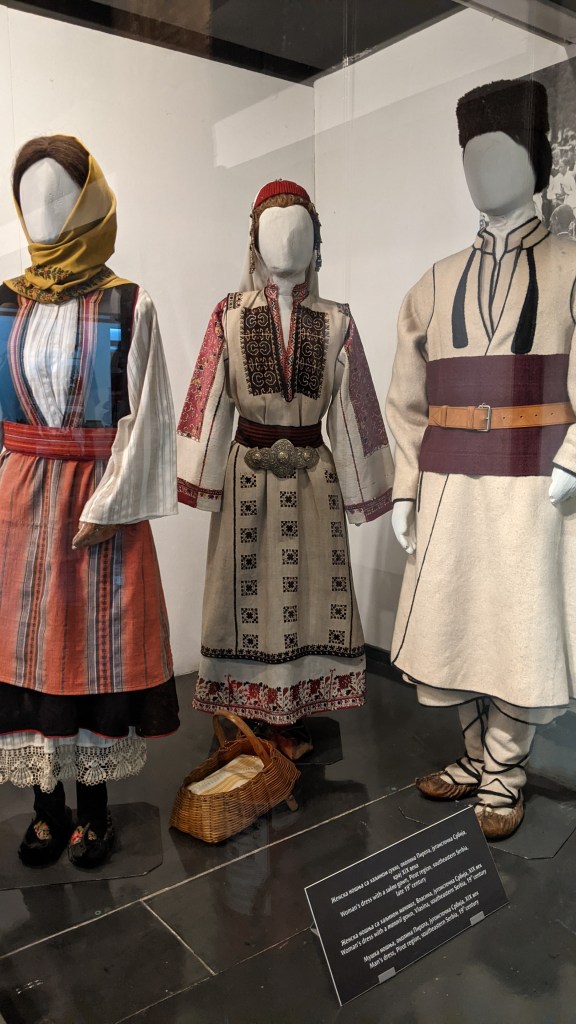
Pinot region, southeastern Serbia.
Opanci – During a Serbian wedding ceremony, the bride steps on the groom’s foot. She does this so she gets to wear the pants in the family.
Detail of man’s vest with metal filigree.
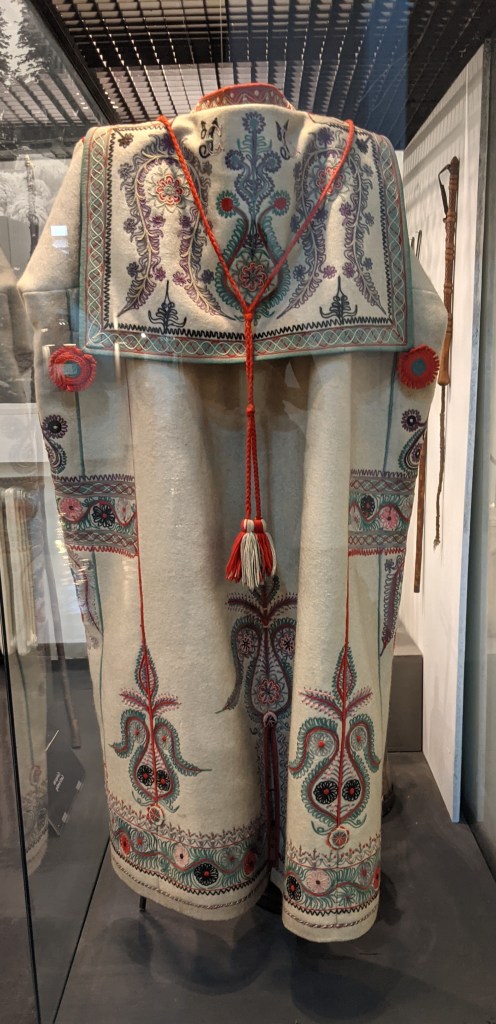
A heavy wool cowherd’s cape.
The museum has carefully preserved many sock patterns in hand-colored charts.
Knit and embroidered socks, worn under opanci.
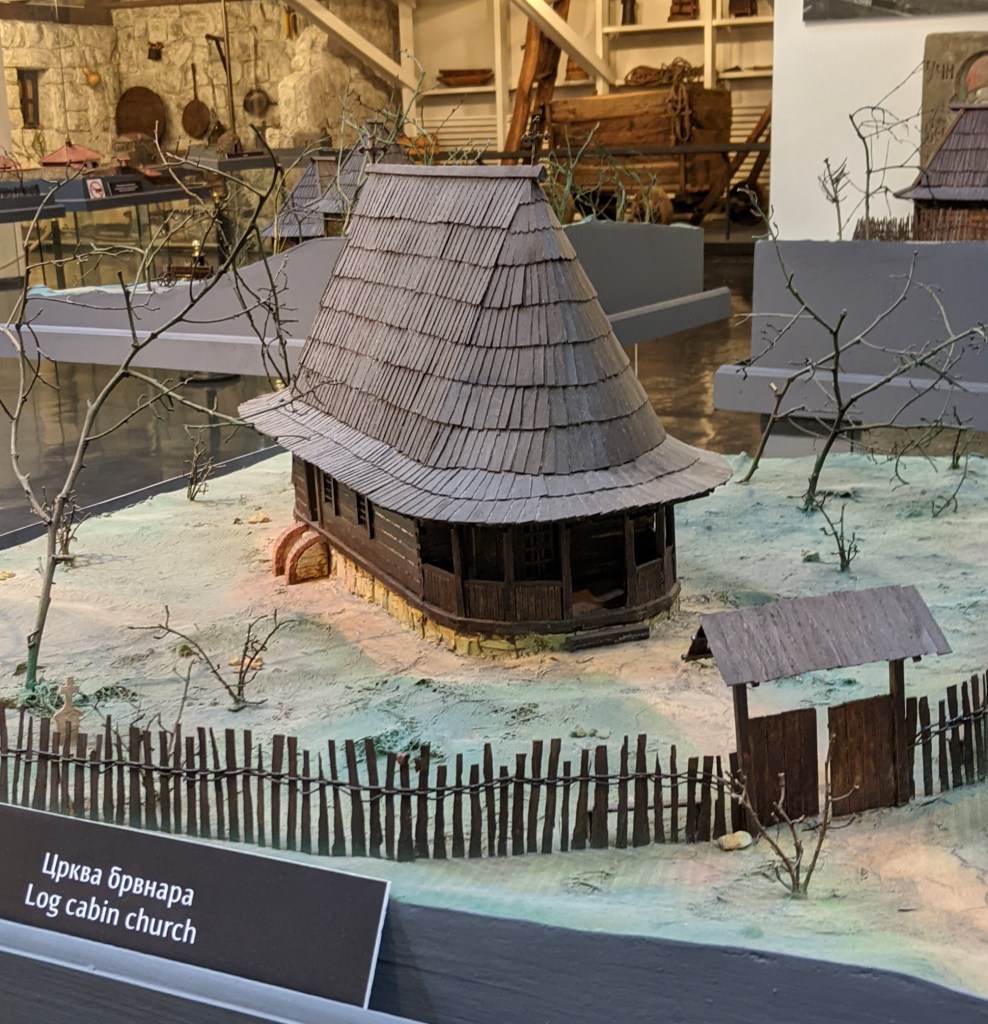
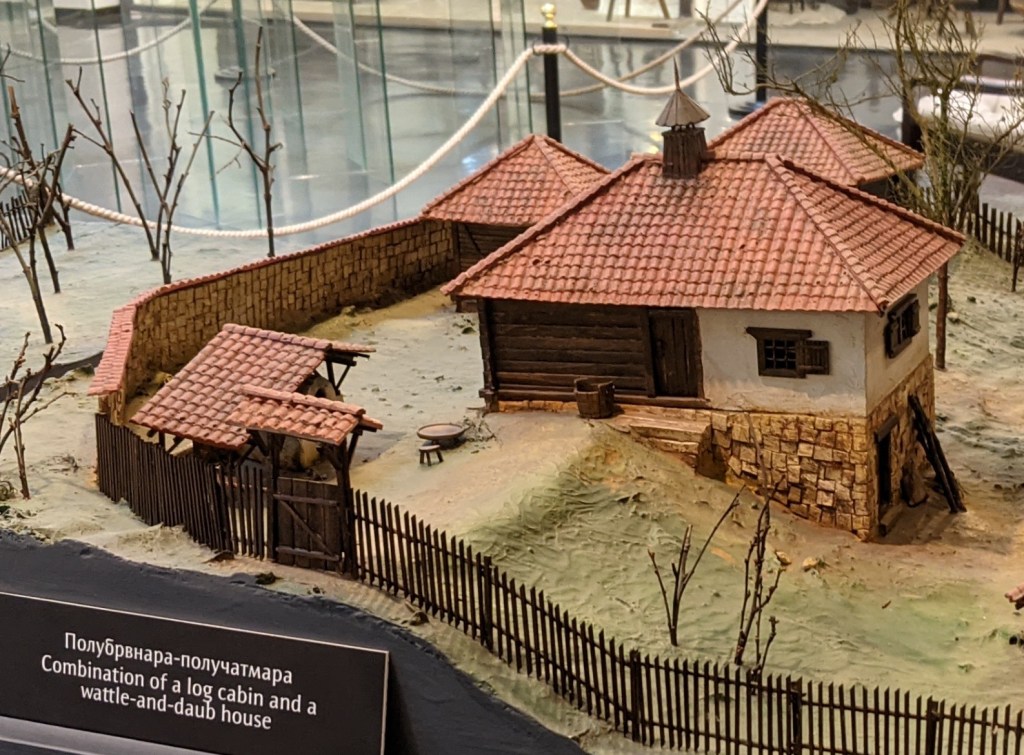
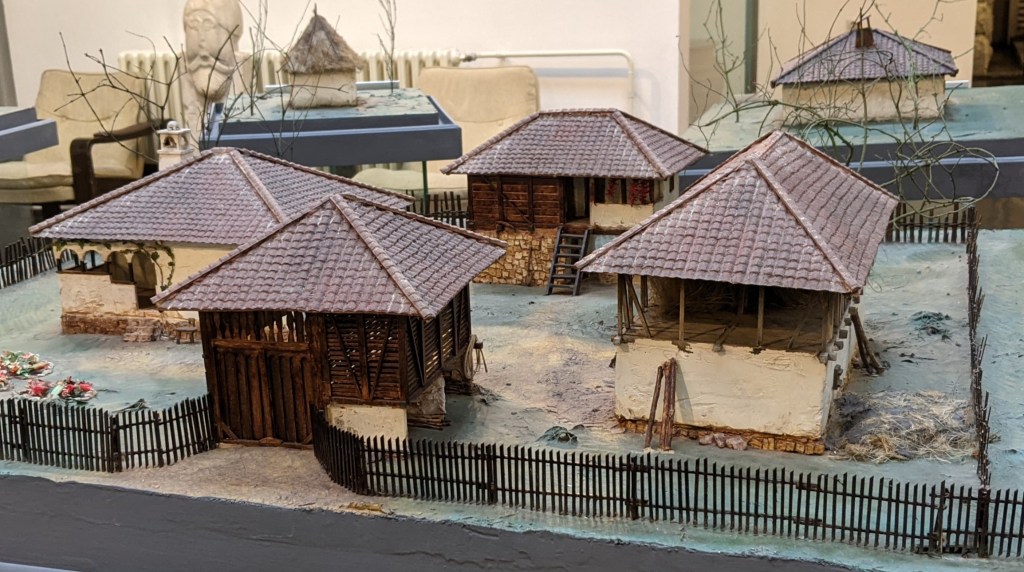
The museum also had displays of regional building styles, from timber framed, to stone, to straw huts.
Different building materials and techniques were used in different regions.
Raised wattle and daub houses. Animal sties are on ground floor, living quarters above
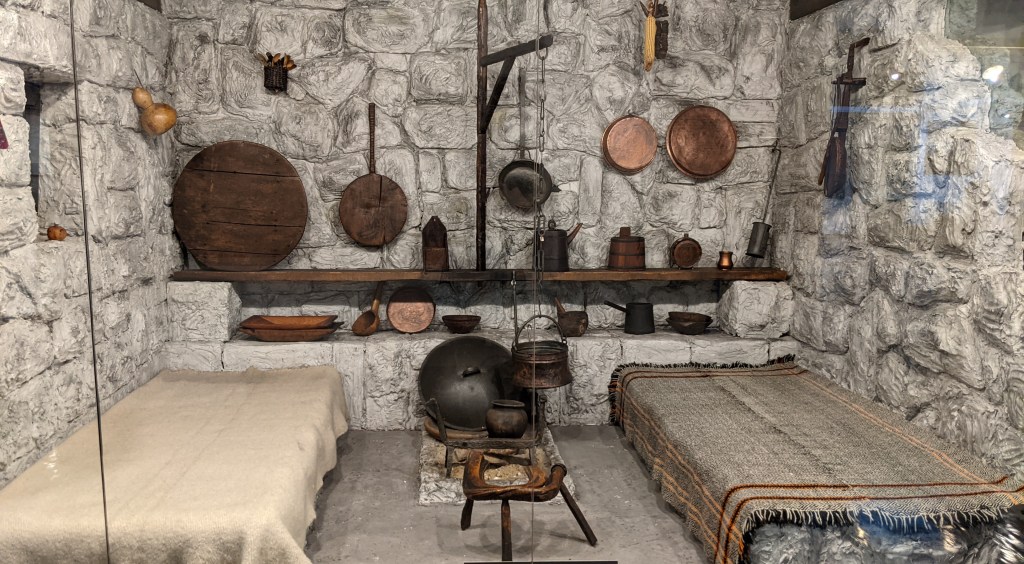
Interior of stone hut.
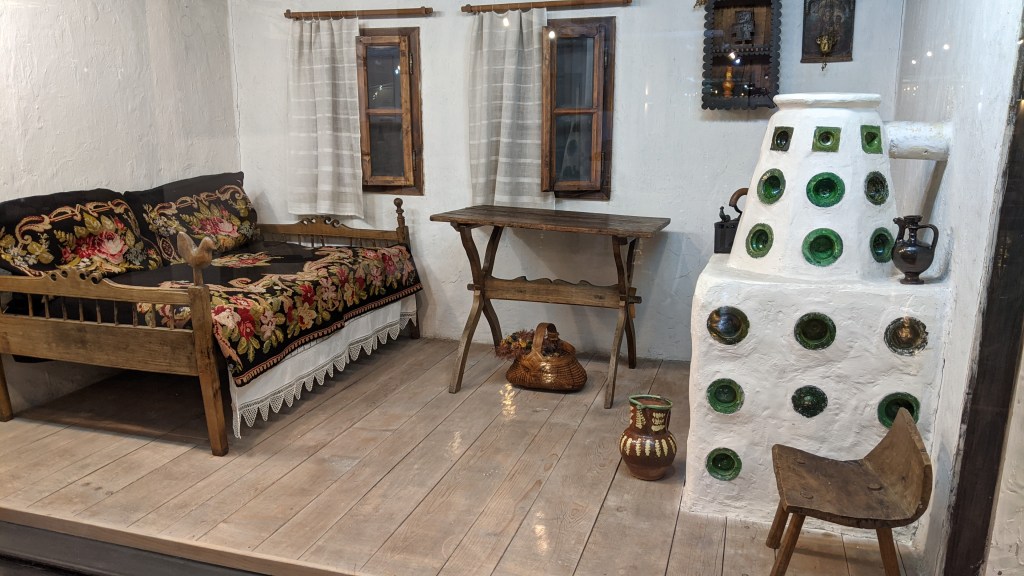
One side of a 19th century central Balkan home. This is the ‘presentable side’, kept neat for company. The green and white object on the right is a stove for heating and cooking. It’s fed from the kitchen side, shown here. The green parts appear to be glazed ceramic inserts shaped like traffic cones, pointy end inward. I assume they improve heat transmission. An icon is on the wall above the stove.
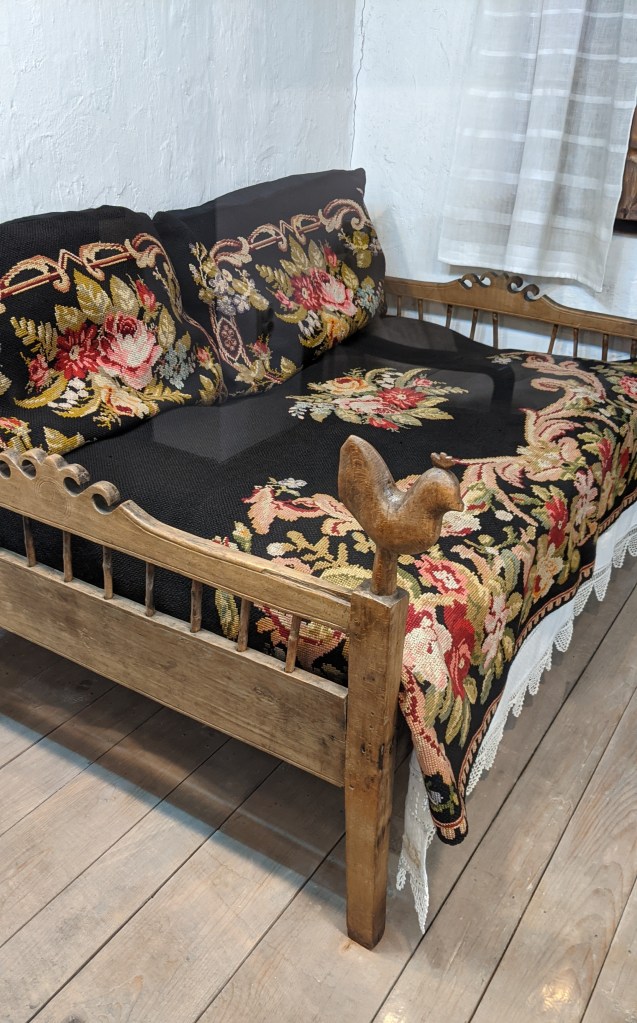
The bedspread looks like it was woven, then decorated with needlepoint. Check out the chicken bedpost. If a chicken is symbolic to Serbians, I cannot find an explanation of it. Maybe just a whimsical touch!
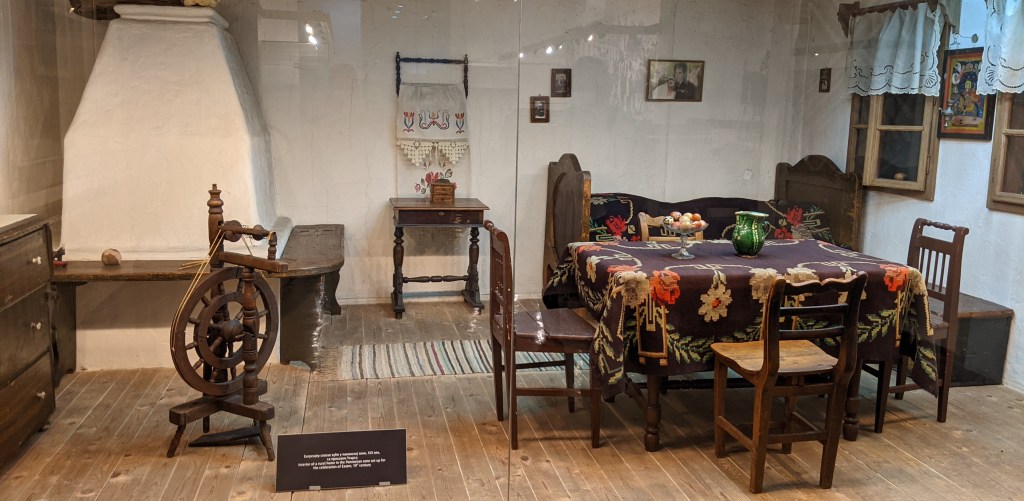
Interior of 19th century home, decorated for Easter. The eggs are on the woven tablecloth.
Apologies for the glare in many of these pictures. Everything was protected behind plexiglass, and the lighting from other exhibits was hard to avoid.
 There, and Pack Again

Ain’t never seen no cowherder dressed like that in this here United States!
LikeLike