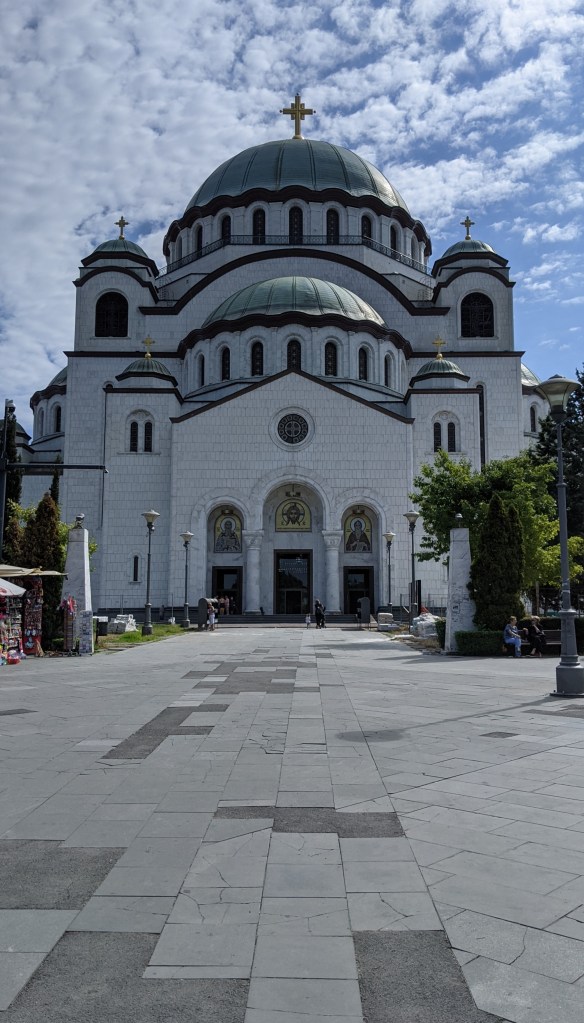
If you could tell the history of Serbia in buildings, you might begin and end at Saint Sava Cathedral.
Saint Sava was instrumental in establishing the Eastern Orthodox Church in what is now Serbia, and the eponymous cathedral, still under construction, is not only a testament to Serbia’s religion, but also its fiercely independent spirit.
Prince Rastko Nemanjic left home at age 15 to join a monastery, and was christened ‘Sava’ after taking monastic vows. Sava’s father, Stefan, was a provincial king who abdicated the throne to become a monk. Stefan’s abdication in 1195 AD led to a civil war as the eldest son, Vukan – backed by the Catholic Church, and middle son, Stefan II -backed by the Orthodox Church in Constantinople, fought for control of their father’s kingdom. This conflict between churches was part of a larger battle between Eastern and Western church influence across Europe and the Mediterranean. The consequences were not just political; eternal souls were at stake.
The war between brothers and churches continued for almost a decade. In the midst of the turmoil, Sava returned, bringing with him the relics of his father. He invited his brothers to a memorial service for his father. During the service the casket was opened, and there lay their father’s body, perfectly preserved, exuding a fragrance of myrrh. Moved by the sight, the brothers eventually agreed to a peaceful settlement. Stephen II took control of Serbia, and Sava began a far-reaching missionary work to ‘save the Orthodox souls of the Serbian people.’*
The principality of Serbia was recognized as a sovereign kingdom by the the Patriarch of Constantinople (the head of the Eastern Orthodox Church), the Serbian church was granted autonomy, and Sava was appointed archbishop of the newly formed Serbian Orthodox Church. He died in 1235, a hero and saint of the Serbian nation, and was eventually buried in Mileseva, Serbia.
But that is not the end of the story.
Serbia eventually fell to not only to Austro-Hungarian rule, but later to the Ottomans. Despising their loss of autonomy and the muslim religion of the Turks, the Serbs rebelled. Their war banners depicted Saint Sava, which shifted the tenor of the war from one solely of independence to one of religion. The Turks suppressed the rebellion and ordered Sava’s bones to be dug up, transported to the main square of Belgrade, burned, and the ashes scattered. Four hundred years later, on that same square, Saint Sava’s Cathedral was erected.
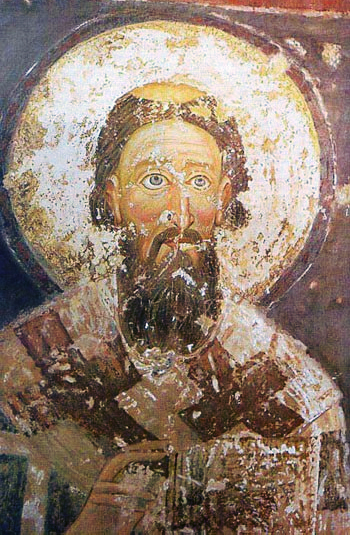
At first we were confused. The East thought that we were West, while the West considered us to be East. Some of us misunderstood our place in the clash of currents, so they cried that we belong to neither side, and others that we belong exclusively to one side or the other. But I tell you, Ireneus, we are doomed by fate to be the East in the West and the West in the East, to acknowledge only heavenly Jerusalem beyond us, and here on earth—no one.
—St. Sava to Ireneus, 13th century
* Sava of Serbia, Orthodox Wiki, https://orthodoxwiki.org/Sava_of_Serbia, August 25, 2021
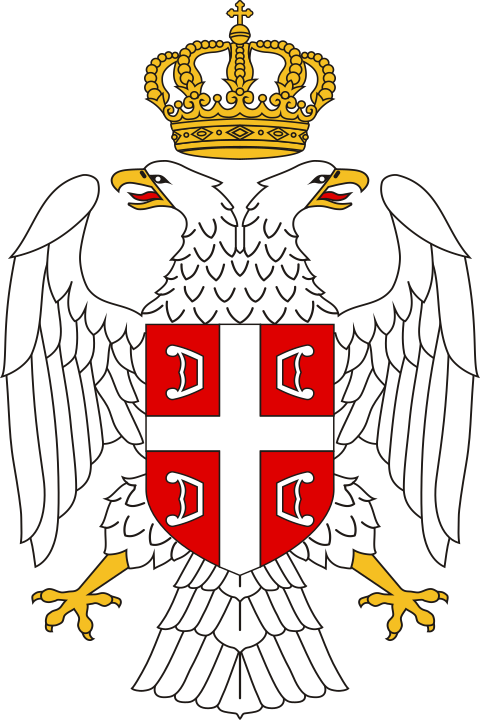
The quote above also explains the Serbia is depicted as a double-facing eagle on Serbia’s coat of arms.
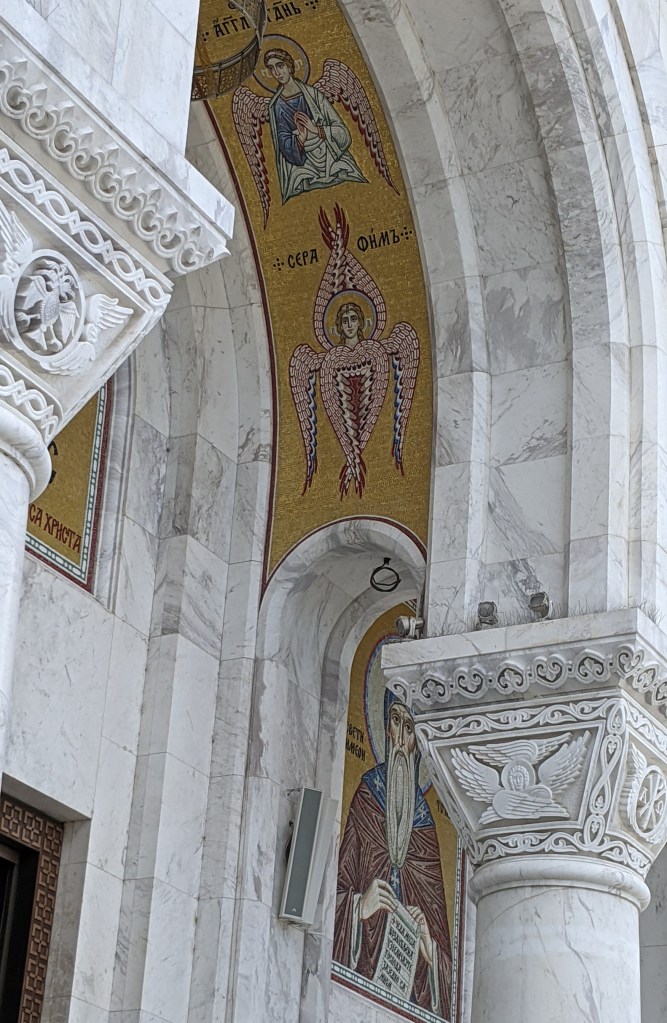
History class is officially over; let’s move on to art.
Saint Sava’s Cathedral was designed in the Serbo-Byzantine style, a style popular during Sava’s own lifetime. However, the cathedral itself was not built until the 1900s, having to overcome both the communist’s suppression of religion and financial hardships in the Serbian nation. Work was begun in 1935 and continues today. If you look closely at the very first picture, you will see marble blocks stacked on each side of the walkway, near the steps of the church.
Byzantine architecture is characterized by domes and vaulted galleries that radiate outward from that dome. Viewed from above, the entire building forms the shape of a cross. The building, and especially the placement of the artwork, is a symbolic representation of the universe. Christ Pantocrator (ruler of the universe) is the central figure, floating overhead, suspended in an otherworldly heaven. Archangels and important saints are placed just beneath him; and depictions of Biblical events sit below, arranged according to liturgical importance. Dozens more saints are depicted at the ground floor of Saint Sava Cathedral.
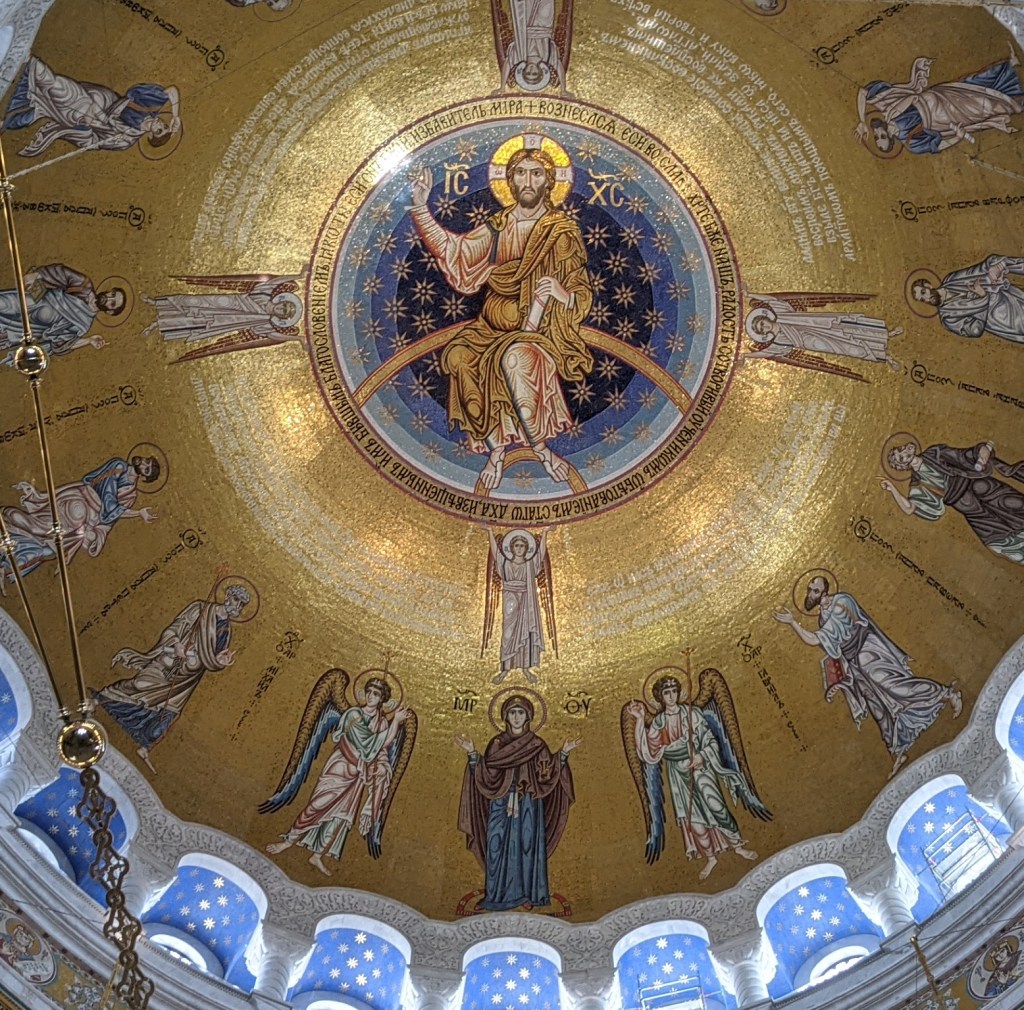
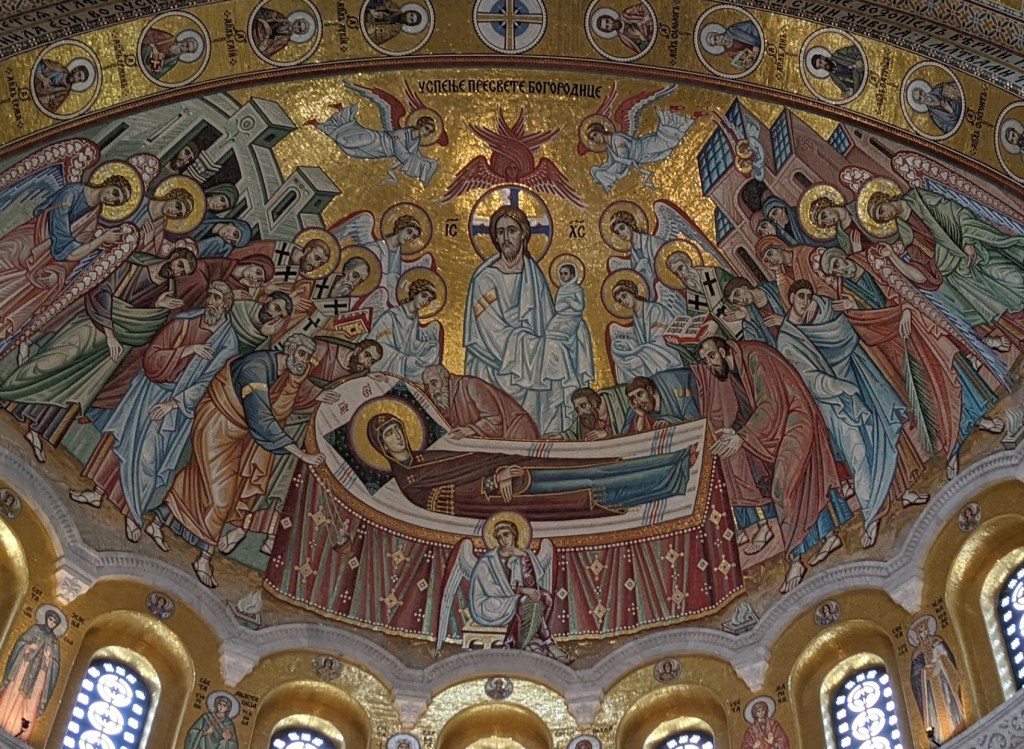
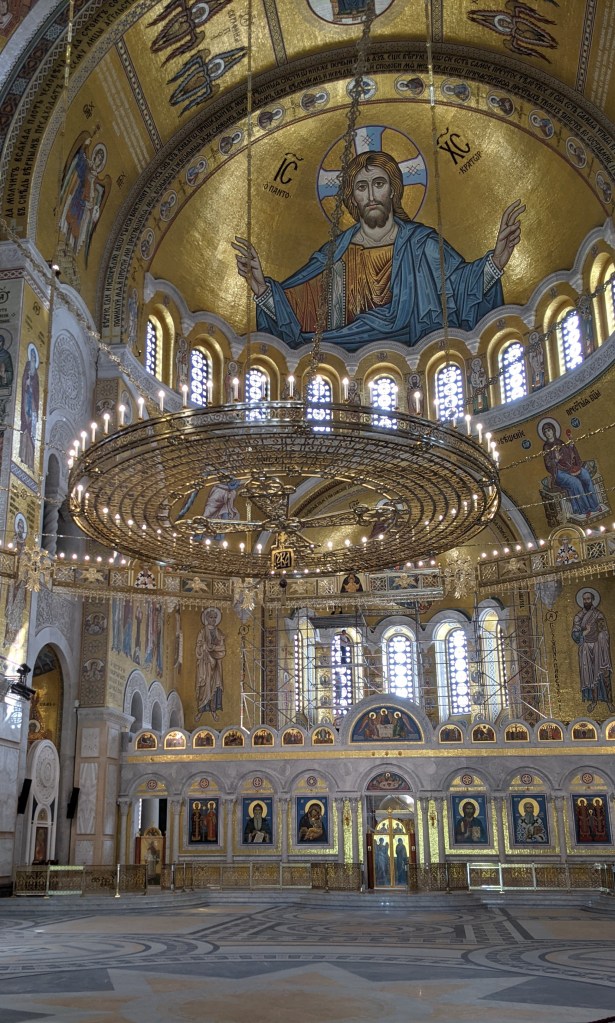
Millions of tiles, or tesserae, cover the walls of the dome and galleys. Some are golden, and some are natural stone. The gold tessera are made by applying gold leaf to the glass, pouring a thin layer of molten glass over the gold, then firing the tile.
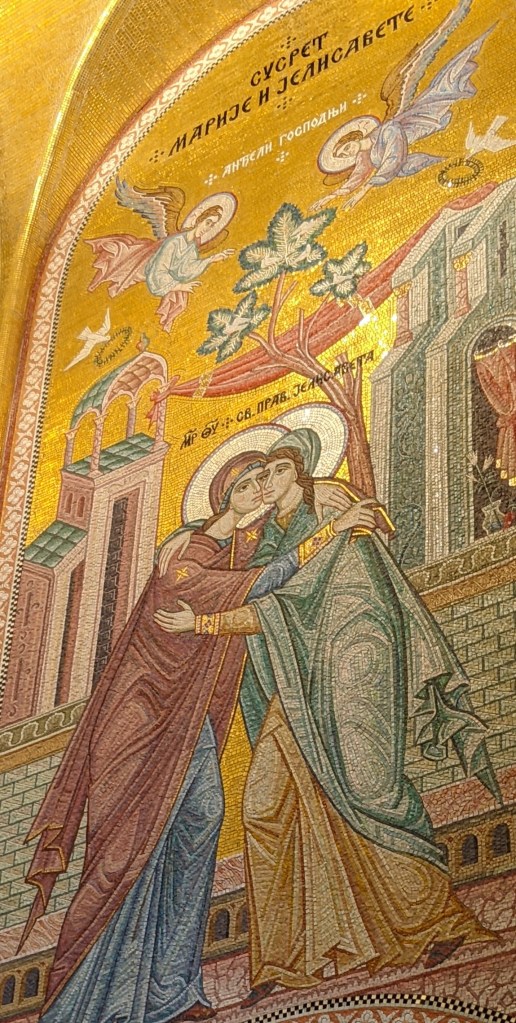

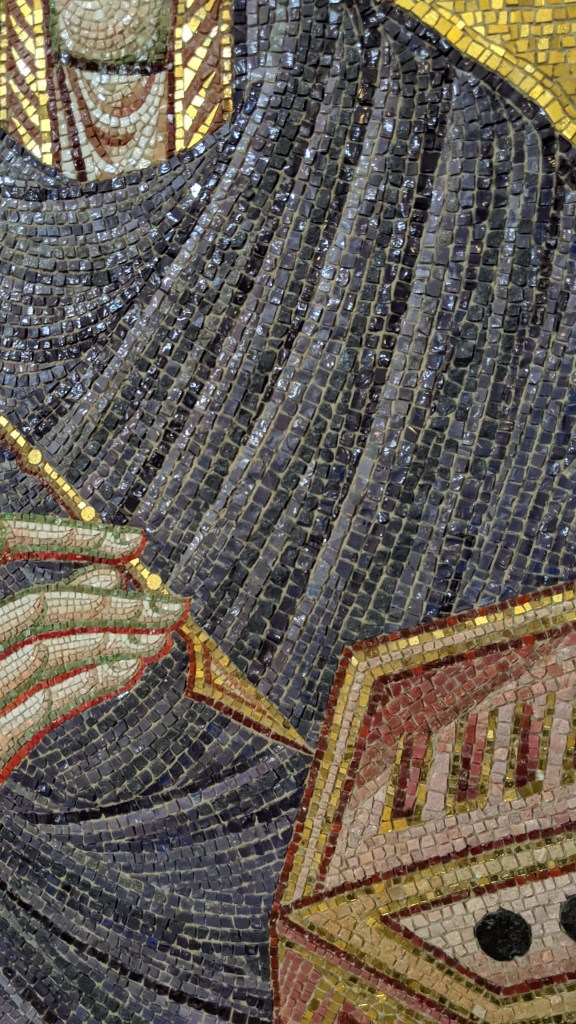
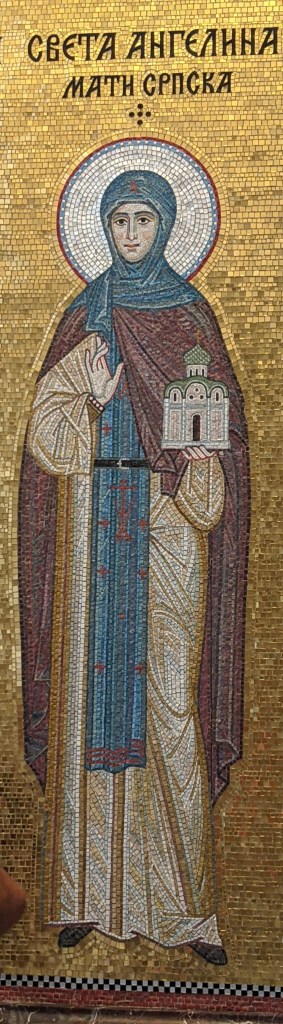
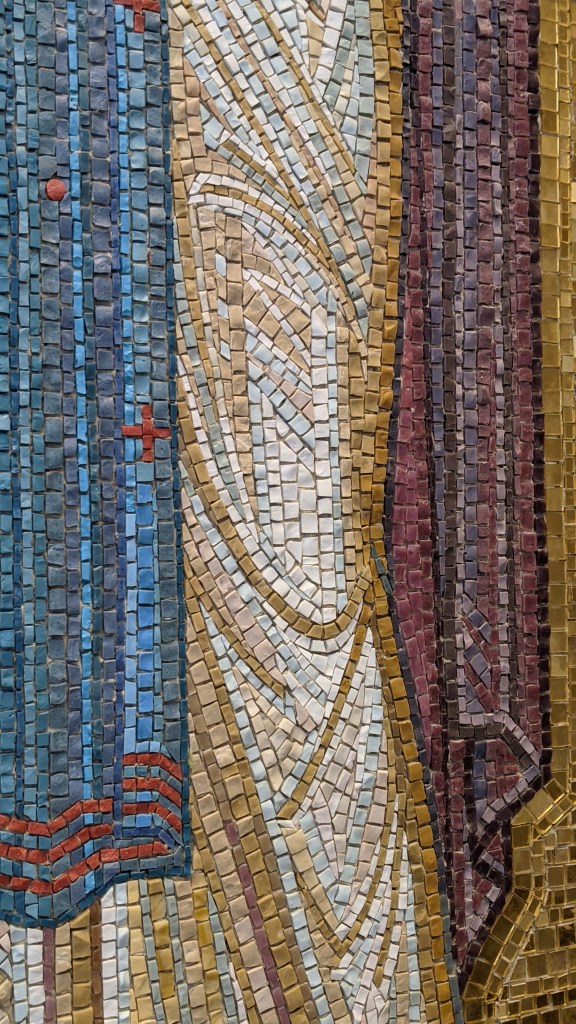
I was amazed by the nuances created by the careful application of each tile color. Everything is linear, there is no blending of tiles to create a color; instead, rows of tiles, all one color, are carefully arranged to produce highlights and shadows, folds of cloth, variations of skin tone.
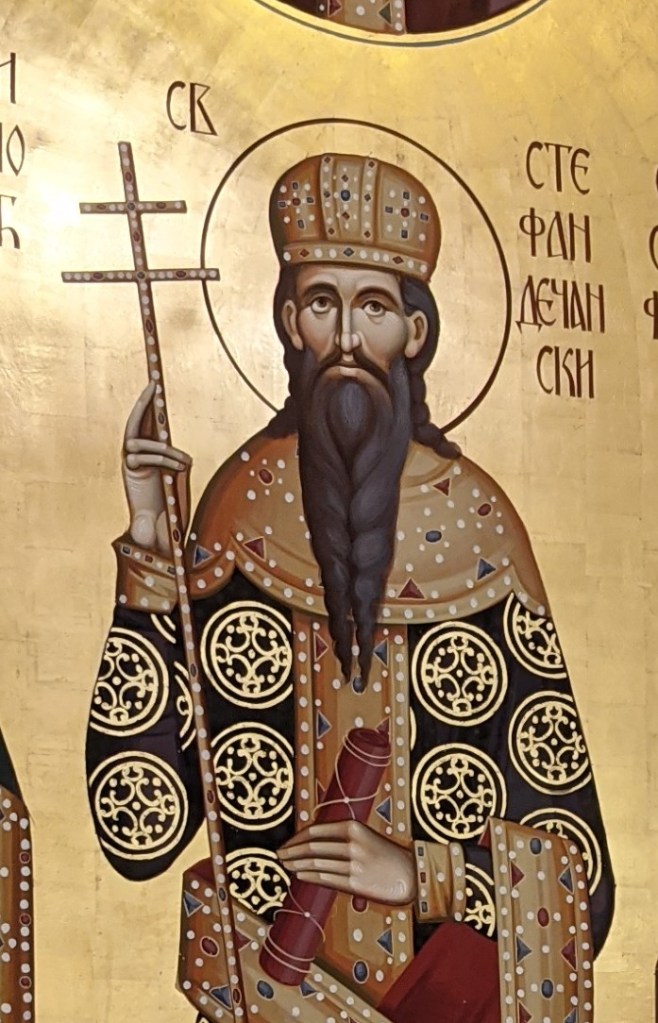
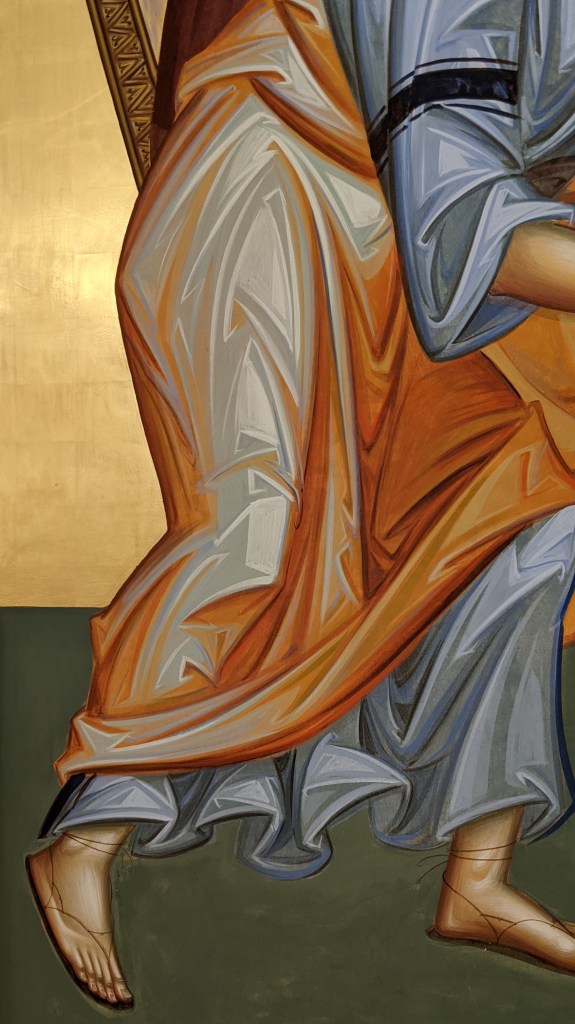
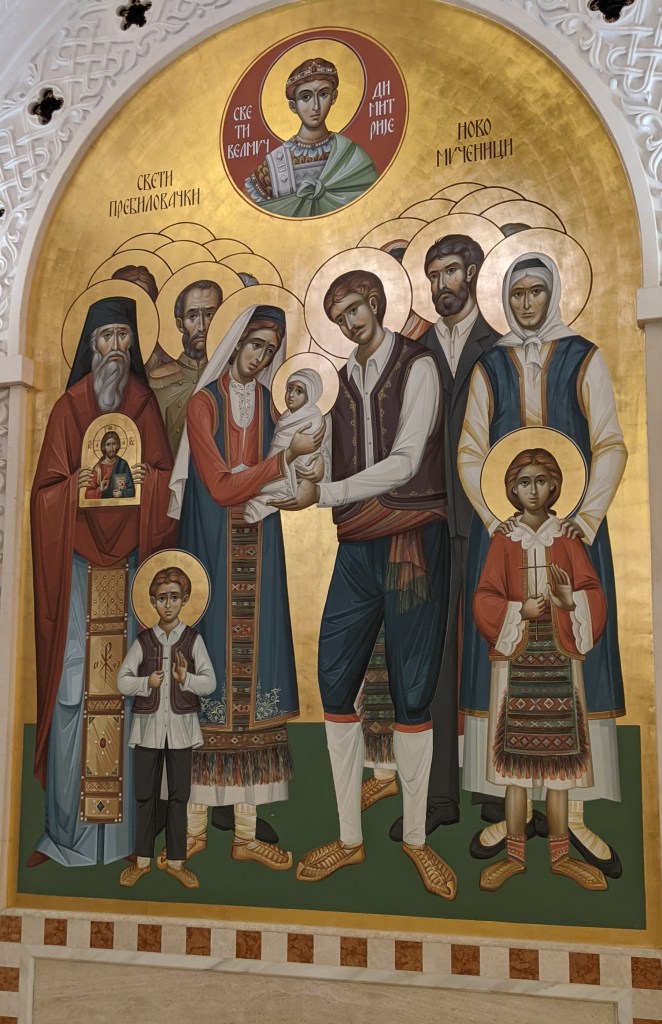
Descending a carved marble staircase, you enter anterooms of the crypt. This level contains minimal mosaic applications. Instead the walls are completely covered with paint and gold leaf depictions of saints. The floors, as on the main level, are beautifully decorated with inlaid stone, forming complex motifs.
* Sava of Serbia, Orthodox Wiki, https://orthodoxwiki.org/Sava_of_Serbia, August 25, 2021
 There, and Pack Again
Most interesting, thank you. Great camera work too.
LikeLike
Pingback: Христос се Роди, Сређан Божиђ! | There, and Pack Again