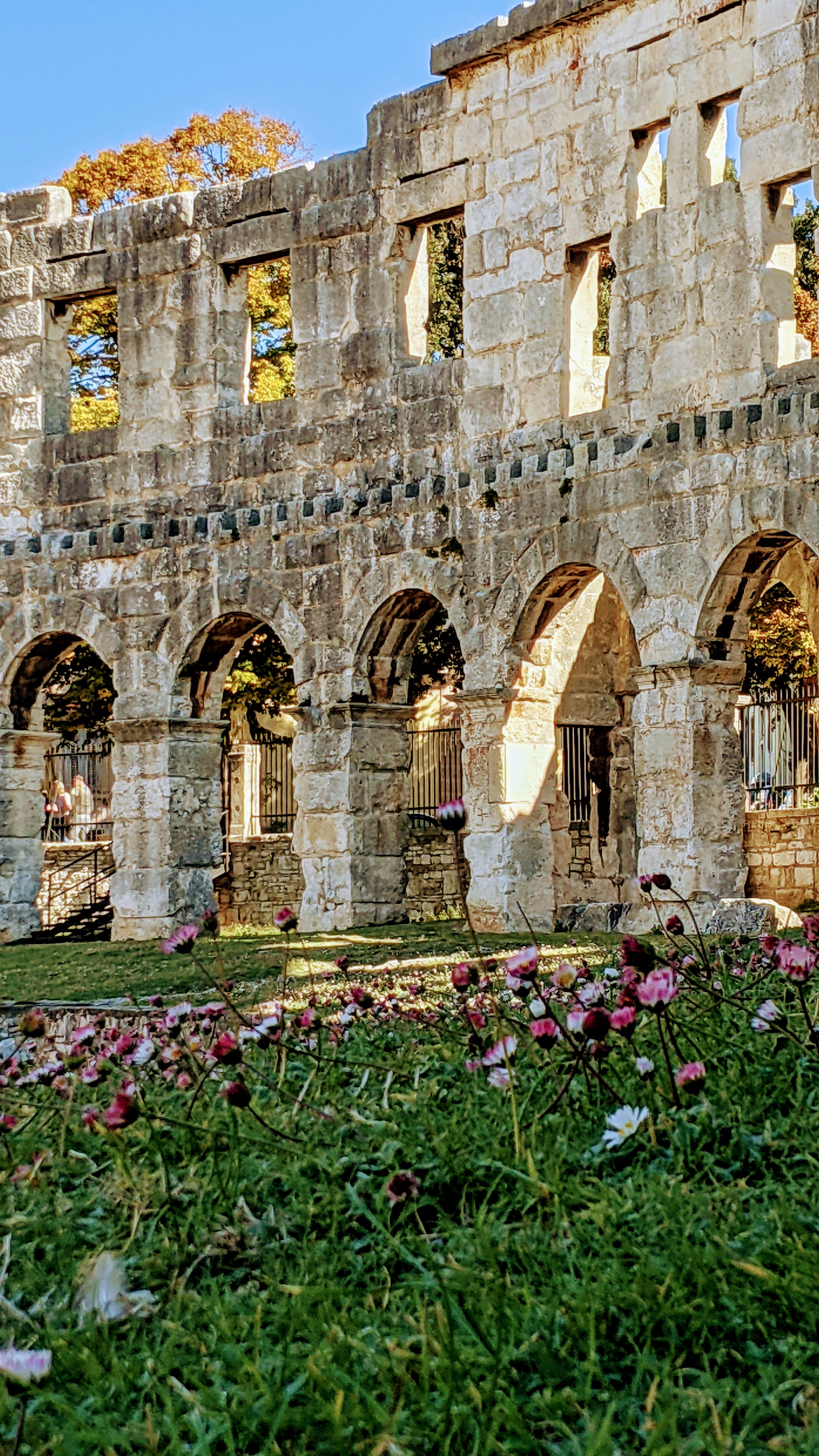
The best view of the amphitheater is one I cannot get.
But even with my limited perspective, I can show you around a little bit.
Slightly different stories have been circulated regarding the construction of the amphitheater.
- It was erected by the Romans between 27 BC and 68 AD.
- It was built by Charlemagne during in the Middle Ages.
- It was erected overnight by flying fairies from the mountains. The fairies were startled by a crowing rooster and fled, dropping building stones in the center of a nearby city.
Some folks hold with one view and some another, so I won’t criticize you if our pet theories differ.
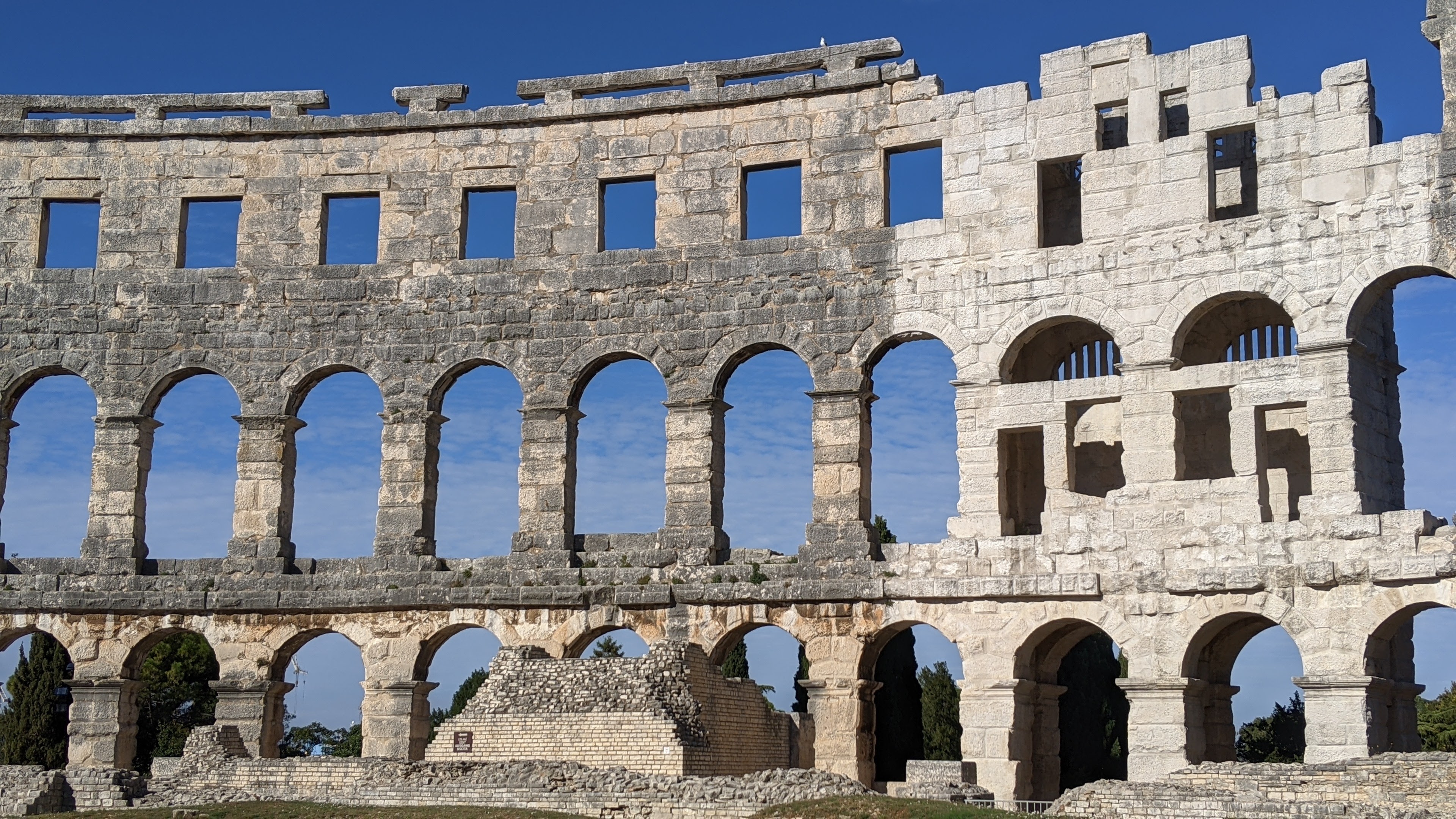
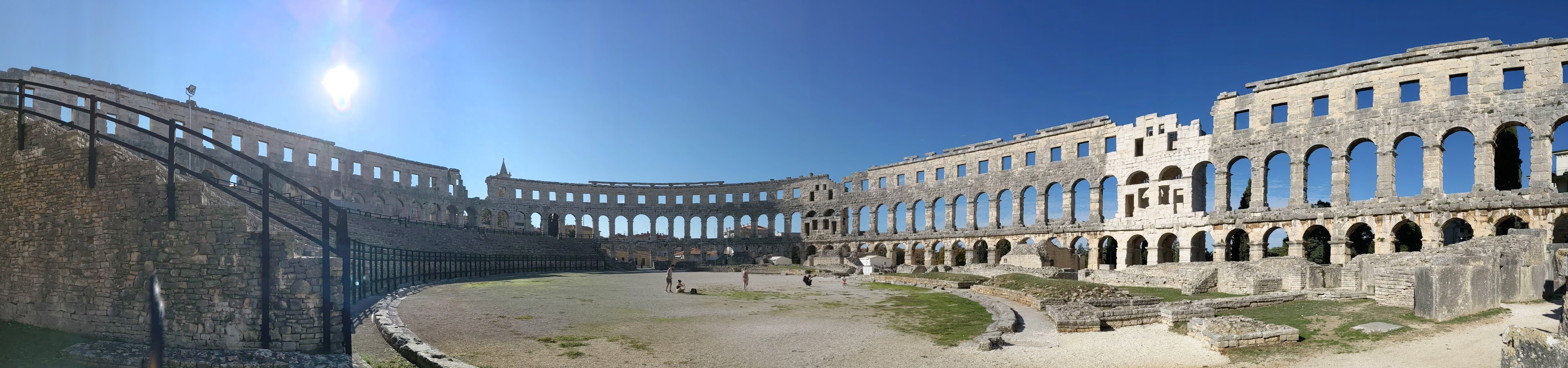
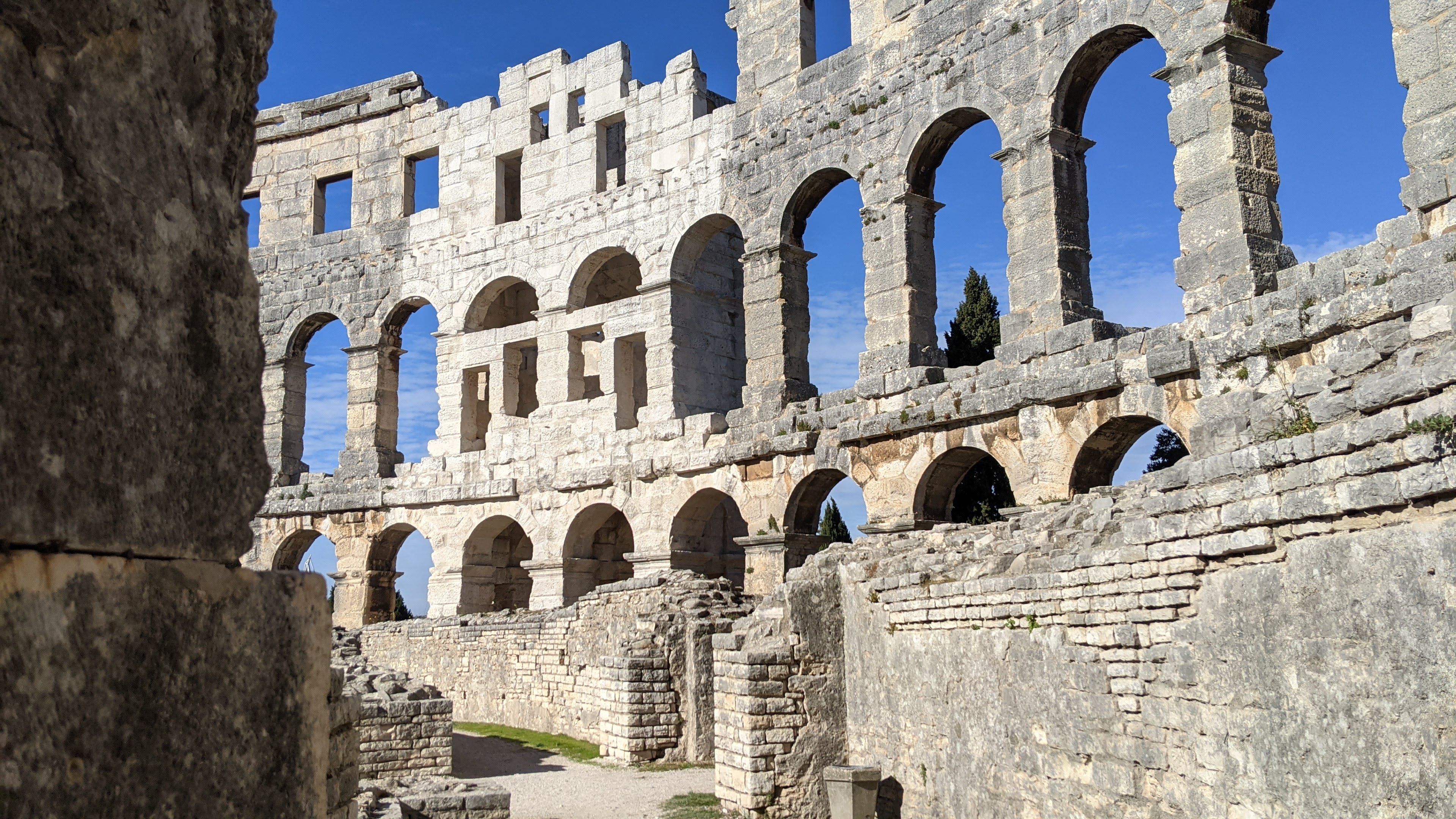
The theater sits 200 meters from the Adriatic, placed on a natural incline between the waterfront and the town. Just over 100 feet tall and 400 feet across, it still looks substantial, if slightly emaciated. Three tiers of arched and rectangular arcades hint at the colossal structure that hosted not only gladiator fights, but public hearings, staged animal hunts, and state-sponsored persecutions.
The skeleton that we see today is only the outer wall of an enormous entertainment complex. The amphitheater would have originally contained a walking area between the outer and inner walls, two levels of concentric seating, a narrow enclosed roof to shed water, and a tarpaulin that could be hauled across the skyward opening in case of bad weather. Limestone pylons the size of cars supported seating for 20,000 spectators. A labyrinth of passageways housed competitors, prisoners, and animals. And a system of drains channeled water into reservoirs to supply fountains and water organs or funneled it away from the foundation to protect the building. Outside the walls, four immense towers reinforced the limestone shell and housed stairways to upper level seats.
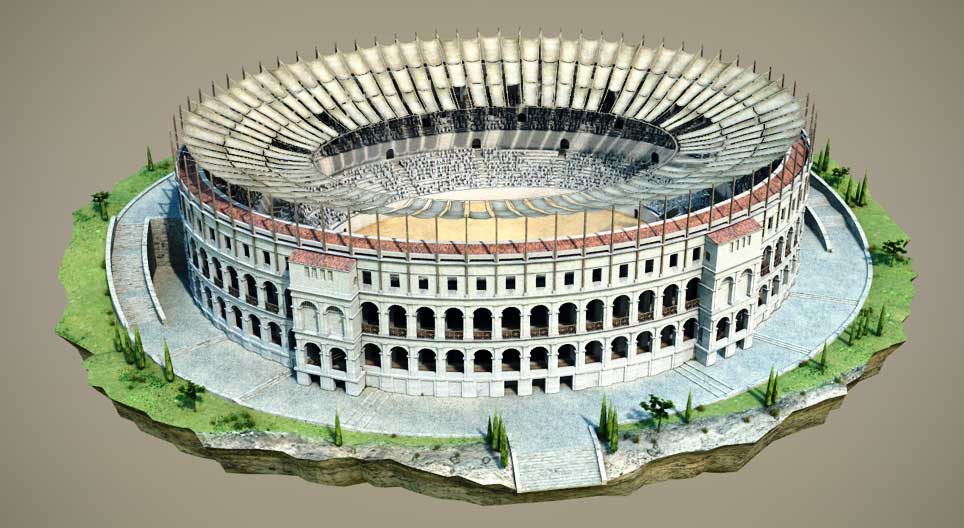
Oversized arched doorways at opposite ends of the structure admitted gladiators and animals. A coarse sandy arena floor drained blood and sweat away. Six small perimeter doors and a secret subterranean corridor under the arena allowed assistants to remove dead bodies and stage props for the next battle. One of the doors was named porta Libitinaria, alluding to the Roman goddess of the dead and the underworld.
A small stone alter near the south entrance honored Nemesis, a goddess who repaid hubris with swift retribution. Nemesis was the patron saint of gladiators.
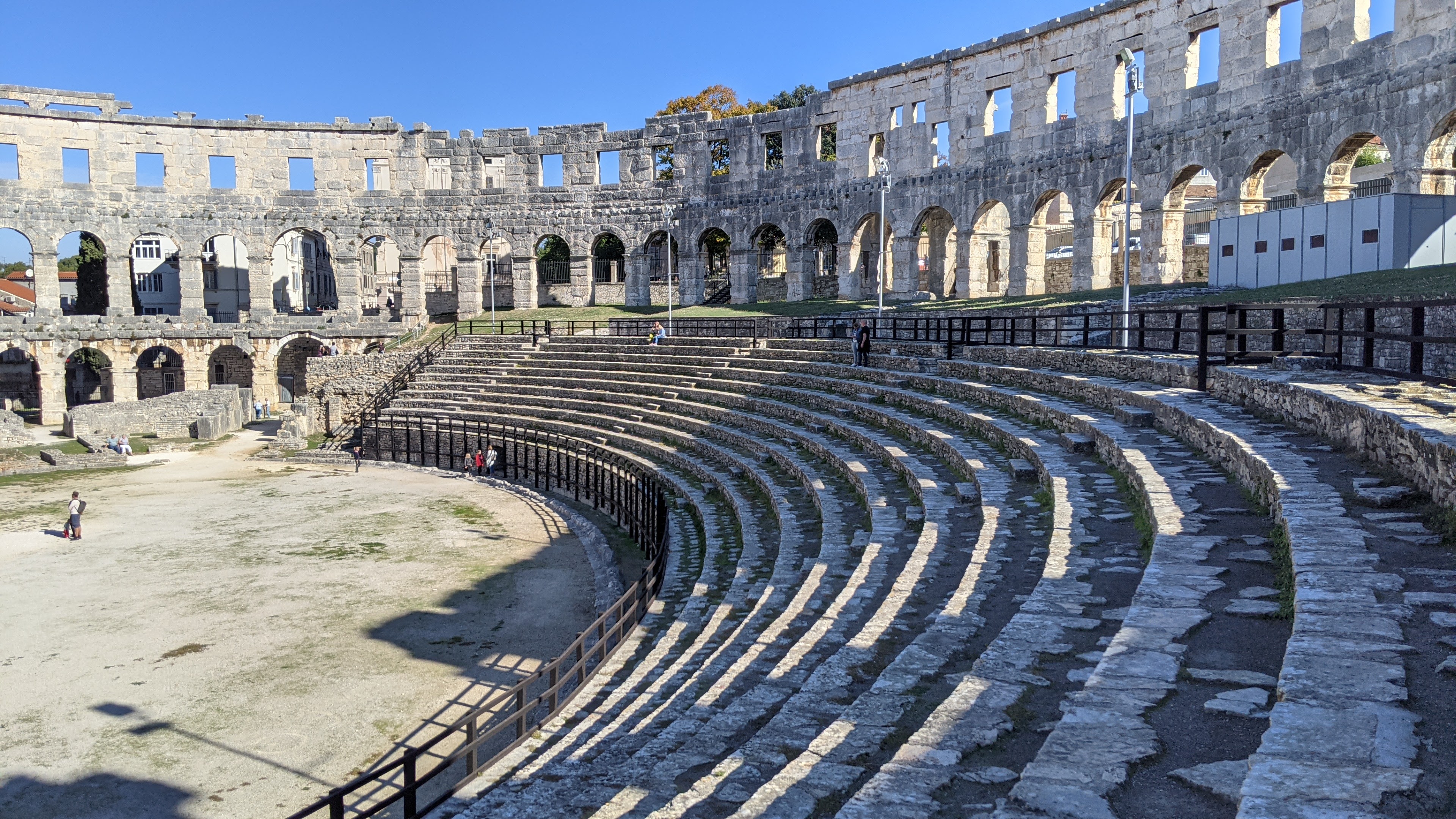

After gladiator fights were outlawed in the 5th century, the amphitheater sat empty. Its valuable decorations and most useful materials were carried away to adorn private homes or repair city walls. Some blocks reportedly went to Venice for palace material. Only the items too difficult to remove were left in place. Cattle grazed in the interior of theater.
Twice, plans were made to demolish the outer walls: first — to deconstruct, move, then reconstruct the structure in Venice as a monument to that city-state’s greatness; and second — to build a defensive fortification against invading Turks while simultaneously preventing them from filling the theater with earth and using it as strategic high ground.
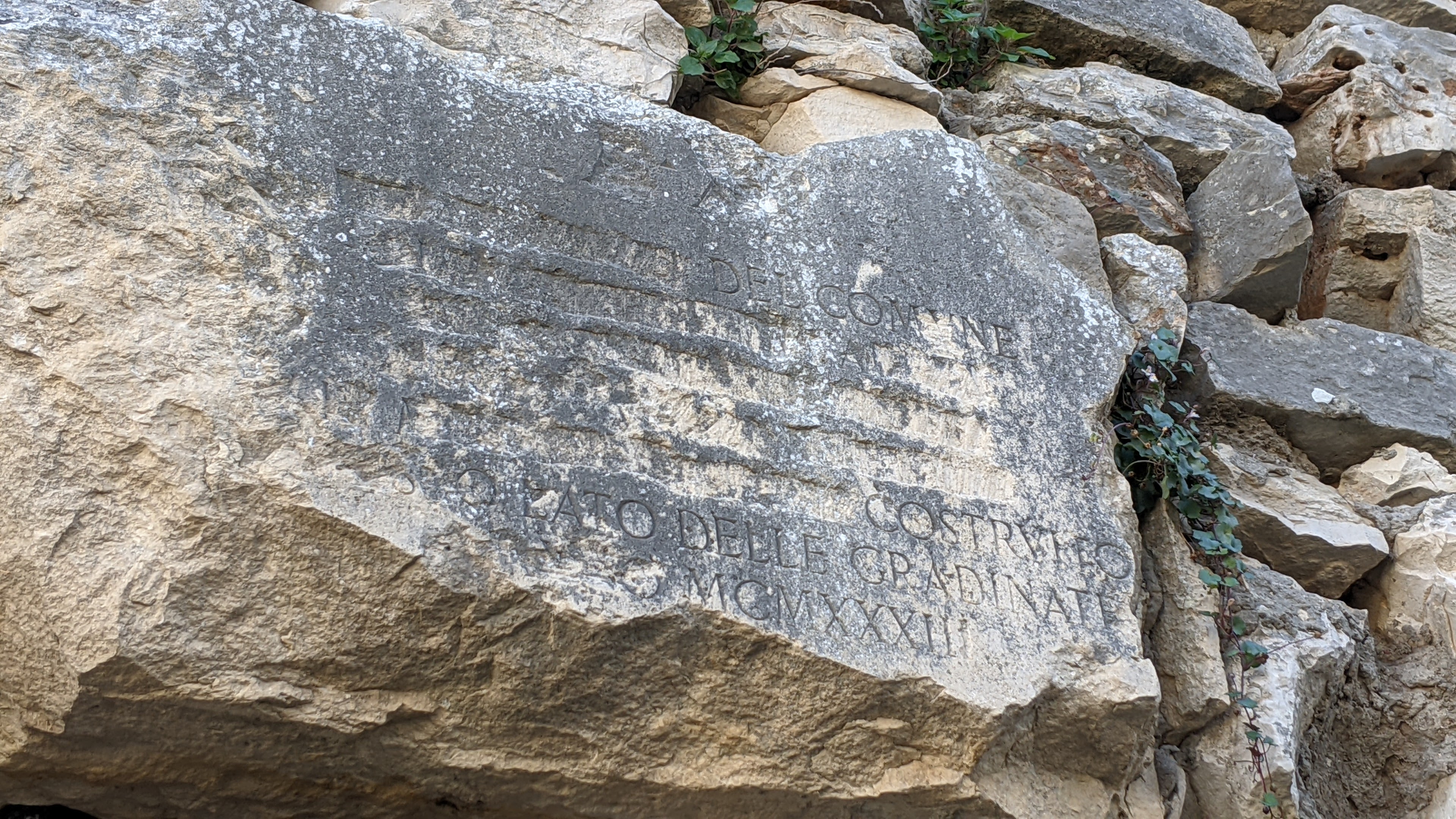
Istria was annexed to Italy after World War I, and the commune of Pula restored portions of the arena and began holding concerts, civic and military events. Not much is said about these events. Italy’s government was fascist and outlawed many aspects of Istria’s culture. That may be why much of this monument, commemorating restoration efforts that took place in 1933, was obliterated in 1947, after Istria became part of Yugoslavia.
 There, and Pack Again
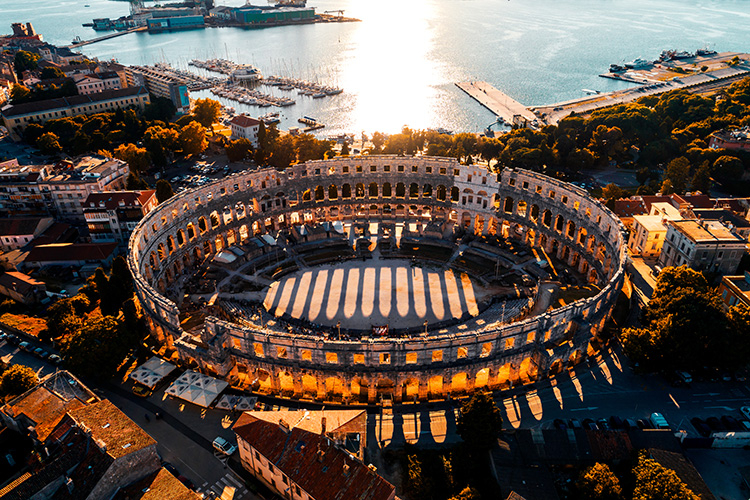
HUGE would be my one-word description, and the aerial photo is awesome! Is the sky always so blue?
LikeLike